|
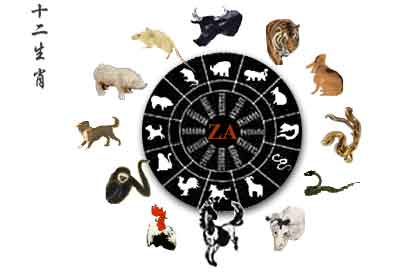
The Japanese Zodiac wheel is a system that uses 12 animal signs to represent each year. These animals are known as the Earthly Branches or Heavenly Stems, which was used by the Chinese as a numbering system from the Shang Dynasty (1600 BC - 1046 BC). Each animal has its unique set of qualities and depending on the year an individual is born in they are thought to possess those qualitites. The Japanese zodiac is based on the Chinese zodiac and linked to representing the personalities of an individual and used as a Chinese agricultural calendar by farmers during planting and harvesting. The zodiac combined elements of Chinese astronomy, calendars, and philosophies. The Zodiac is used as a method of tracking each lunar year as opposed to solar year and the hours of the day. When you look at the wheel you want to start with the first animal of the first year which is the rat and when you follow it clockwise you will look at the ox, tiger, rabbit, dragon, snake, horse, sheep (ram), monkey, rooster, dog, and big (boar). Although the western world has largely adopted the Gregorian calendar it is still widely used in East Asian countries such as China, Taiwan, Japan, Vietnam, and Korea. Even in western culture there is a a different Zodiac used. It is based on 12 symbols, but it does not use animals and are based on Greek symbols and tied to constellations spanning the sky. Also the Western Zodiac is based on months and not years like the Japanese Zodiac. |


 Japanese Zodiac Wheel
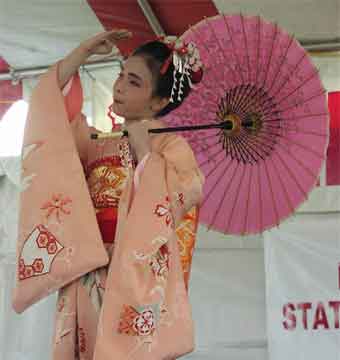 There are primarily two types of Japanese traditional dance forms and they are Odori, which originated in the Edo period, and Mai, which originated in the western part of Japan. Odori has grown out of Kabuki drama and concentrates on male sentiments while Mai is performed in rooms and not on the stage.